How Long Is Someone Contagious With the Flu? What Doctors Actually Want You to Know
Most people think flu contagiousness starts when symptoms do. That assumption is wrong — and it’s a big reason why influenza spreads so efficiently every single season.
The truth is, you can transmit the flu to others a full 24 hours before you feel a single symptom. By the time you recognize something is wrong, you’ve already been infectious for a day. And depending on your age, immune status, and whether you started antiviral treatment, that contagious window can stretch anywhere from five to ten days — sometimes longer.
The standard advice to “stay home when you’re sick” is well-intentioned but incomplete. It misses the pre-symptomatic window entirely, says nothing about when you’re actually safe to go back out, and doesn’t account for how differently the flu behaves in children, older adults, or immunocompromised people.
This guide covers the full contagious timeline with precision: when viral shedding begins, when it peaks, when it drops to negligible levels, and what changes that curve. You’ll also find practical return-to-work guidance, a breakdown of how antivirals like Tamiflu affect contagiousness, and answers to the questions people actually search for — including whether you can still spread the flu after your fever breaks.
Whether you’re navigating a current infection, protecting a vulnerable family member, or just want to understand what the CDC flu guidelines actually recommend and why, this is the most complete answer available.
When Does Flu Contagiousness Begin?
Here’s the part that trips most people up: you become contagious roughly 24 hours before your first symptom appears. That means you can spread influenza to others while you still feel completely fine.
The influenza virus has an incubation period of one to four days after exposure, with two days being the most common. During the later part of that incubation window, viral shedding — the process of releasing virus particles into the air through breathing, coughing, or touching surfaces — is already happening at meaningful levels.
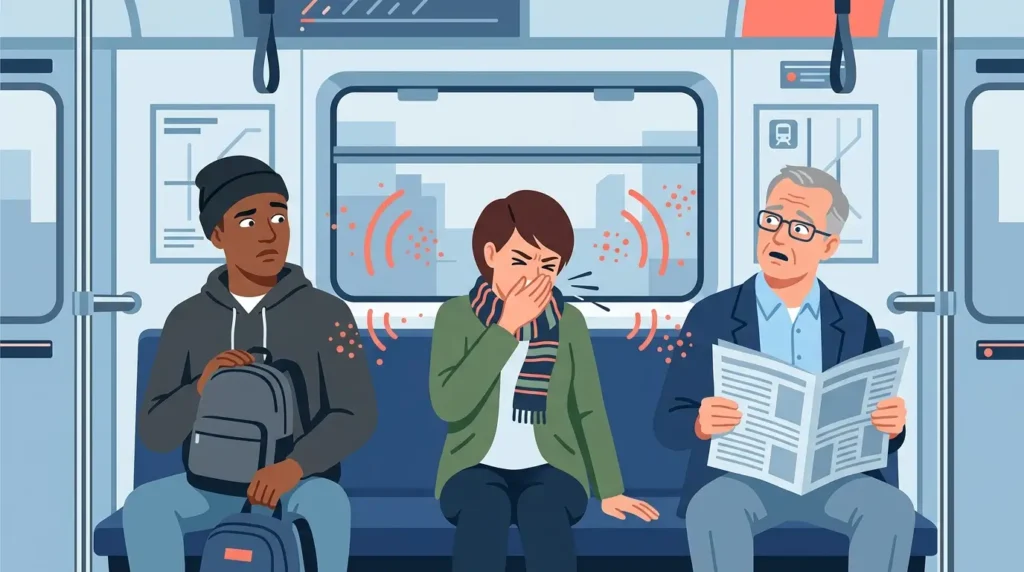
In a 2018 study published in PNAS, researchers found that simply breathing (without coughing) released substantial flu virus into the air. That was a genuinely unsettling finding at the time, because it meant passive exhalation was enough to spread infection in a closed space like an office or a train car.
What does this mean practically? If your colleague sat next to you at lunch on Tuesday and mentioned they “feel a cold coming on” Wednesday morning, they were likely already shedding virus at that Tuesday lunch. You were already exposed before either of you knew anything was wrong.
This is why flu season is so hard to contain at the community level. The most contagious phase overlaps with the period when people feel well enough to go about their lives normally.
How Long Does the Contagious Period Last?
For most healthy adults, the contagious period runs from about one day before symptoms appear through five to seven days after symptoms begin. That adds up to a total contagious window of roughly six to eight days.
Day one through day four after symptoms start tends to be the period of highest viral shedding. This lines up with when people usually feel worst: the fever, the body aches, the exhaustion that makes you not want to move. Nature has a grim efficiency there — your immune system is fighting hardest right when you’re spreading the most virus.
By day five or six, viral shedding drops significantly in most healthy adults, though it doesn’t stop entirely. By day seven, most people are no longer meaningfully contagious, even if they still have a lingering cough or fatigue.
Important note: you can still have symptoms after you’ve stopped being contagious. Post-flu coughs often persist for one to two weeks after the infection has cleared. So a cough by itself isn’t a reliable indicator that you’re still contagious — it’s just your airways finishing their recovery.
For a practical reference guide on flu symptoms and what each one means, see our complete flu symptoms guide.
Does the Contagious Period Differ in Children?
Yes, and this is one of the most important differences to understand. Children are contagious for longer — sometimes significantly longer — than healthy adults.
Studies have documented flu viral shedding in children lasting up to 10 days after symptom onset, and in some cases even beyond that. There are two reasons for this. First, children generally have less prior immunity to influenza, so their immune systems take longer to get the infection under control. Second, kids shed virus at higher concentrations overall, which is part of why schools are such effective amplifiers during flu season.
If your child tests positive for influenza, the conservative guidance is to keep them home for at least five days after symptoms begin, or 24 hours after their fever breaks without fever-reducing medication — whichever comes later. In practice, for school-age children, waiting the full seven days before return to normal activities reduces the risk of spreading to classmates.
This also has implications for households. A child with the flu is potentially contagious around their parents, siblings, and grandparents for a longer window than an adult with the flu would be. If there are older adults or immunocompromised family members in the home, that extended window matters enormously.

What About Older Adults and Immunocompromised People?
At the other end of the spectrum, people with weakened immune systems — whether from age, medical conditions, or immunosuppressive medications — can shed flu virus for dramatically extended periods.
Published case reports and clinical studies have documented flu viral shedding in severely immunocompromised patients lasting weeks or even months, not days. Patients undergoing chemotherapy, organ transplant recipients on anti-rejection drugs, and people with advanced HIV fall into this category.
For otherwise healthy older adults (65 and above), the contagious window is typically similar to healthy younger adults — five to seven days after symptom onset — but the infection itself tends to be more severe and the risk of complications is higher. Pneumonia, secondary bacterial infections, and hospitalization are all more common in this age group.
If you have a family member who is immunocompromised, the practical takeaway is this: a flu diagnosis in any household member should prompt extra caution regardless of where that person is in their recovery. Even “mild” contagiousness late in the illness can be dangerous for someone with a compromised immune system.
Does the Flu Shot Change How Contagious You Are?
This is a question I get asked constantly, and the answer is nuanced. The flu vaccine reduces your likelihood of getting infected in the first place. If you do get infected despite vaccination, evidence suggests you may shed virus at lower levels and for a shorter duration — though this is harder to study and the effect size varies by vaccine match to the circulating strain.
What the vaccine does not do is create a scenario where you’re infected and definitely not contagious. A vaccinated person who contracts influenza can still spread it. The vaccine reduces, but does not eliminate, transmission risk.
The more important point is this: getting vaccinated protects not just you but the people around you through reduced overall community transmission. Even a 40% effective vaccine (considered a low-effectiveness year) meaningfully reduces how many people in a community are shedding virus at any given time, which makes the whole season less intense for everyone.
How Do Antivirals Like Tamiflu Affect the Contagious Period?
Antiviral medications — oseltamivir (Tamiflu), zanamivir (Relenza), and baloxavir (Xofluza) — can shorten both the duration of illness and the contagious window, but the timing of treatment matters enormously.
To be effective, antivirals need to be started within 48 hours of symptom onset. When taken that early, research consistently shows they can reduce viral shedding duration by one to two days. For someone whose normal contagious window is five to seven days, that’s a meaningful reduction.
Baloxavir, approved in 2018, has shown particularly strong effects on viral shedding compared to the older oseltamivir in some studies — reducing viral load faster in the first few days of treatment. A 2020 study in The Lancet Infectious Diseases found that household members of people treated with baloxavir had lower transmission rates than those of people treated with oseltamivir, which suggests the faster viral suppression translates to real-world protection benefits.
The catch, of course, is that most people wait too long. Many don’t test immediately when symptoms appear, or assume they have a cold rather than the flu and wait to see if symptoms worsen. By the time they get a positive flu test and a prescription, they’re past the 48-hour window and the antiviral has much less effect on either illness duration or contagiousness.
The takeaway: if you have flu symptoms and access to rapid testing, test early. If you test positive, ask your doctor about antivirals immediately rather than waiting.
What Are the Rules for Returning to Work or School?
The CDC and most public health bodies recommend staying home for at least 24 hours after your fever has broken, without the use of fever-reducing medications like ibuprofen or acetaminophen.
In practice, for flu specifically, this guidance is often too permissive given what we know about viral shedding. A person whose fever breaks on day four may still be shedding meaningful amounts of virus on days five and six. The fever-free guideline was designed to be practical and workable, not to eliminate all transmission risk.
A more conservative approach — and the one I think makes sense if you have contact with vulnerable people — is to stay home through day five of symptoms at minimum, ideally day seven, regardless of when your fever resolves. This is the approach recommended by some hospitals for their staff, particularly in clinical settings.
For children returning to school, many districts now follow the five-day minimum from symptom onset as their official policy, but individual school policies vary. Always check with your child’s school directly.
If you work in healthcare, elder care, or another setting with vulnerable populations, check your employer’s specific return-to-work policy. The standard community guidance may not be strict enough for clinical environments.
Read more about when it’s safe to return to daily activities in our How to Cure the Flu Fast.
Can You Spread the Flu Without Having Symptoms at All?
Yes, though this happens less often with influenza than with some other respiratory viruses. An estimated 20 to 30 percent of influenza infections are asymptomatic or so mildly symptomatic that people don’t recognize them as the flu. These individuals can still shed the virus and infect others, though typically at lower levels than people with full symptomatic infection.
This is distinct from the pre-symptomatic transmission discussed earlier, where someone is infected, will develop symptoms, but hasn’t yet. True asymptomatic transmission means some people carry and spread the virus while never feeling sick at all.
This has real implications for household transmission. If one family member gets the flu and another doesn’t develop symptoms, it doesn’t necessarily mean the second person wasn’t infected — they may have had an asymptomatic infection, and they may have spread it to others during that time.
How Is Flu Transmitted, and Does That Affect Contagiousness Duration?
Influenza spreads primarily through respiratory droplets — larger particles expelled by coughing or sneezing that travel short distances and land on surfaces or are inhaled by people nearby. It also spreads through smaller aerosolized particles that can linger in the air longer, and through direct contact with contaminated surfaces followed by touching the face.
The mode of transmission doesn’t directly change how long you’re contagious, but it does change the practical risk in different settings. A crowded indoor space with poor ventilation extends the effective contagion distance. A well-ventilated space reduces it. This is why flu spreads so effectively in schools, offices, and public transport during winter months when windows stay closed, and people stay close together.
Surfaces contaminated with flu virus can harbor active virus for up to 24 hours on hard surfaces, though the virus degrades much faster on porous materials. Handwashing and avoiding touching your face are genuinely effective countermeasures — not just things adults say to children.
A Practical Day-by-Day Guide to Flu Contagiousness
To make this actionable, here’s a straightforward breakdown:
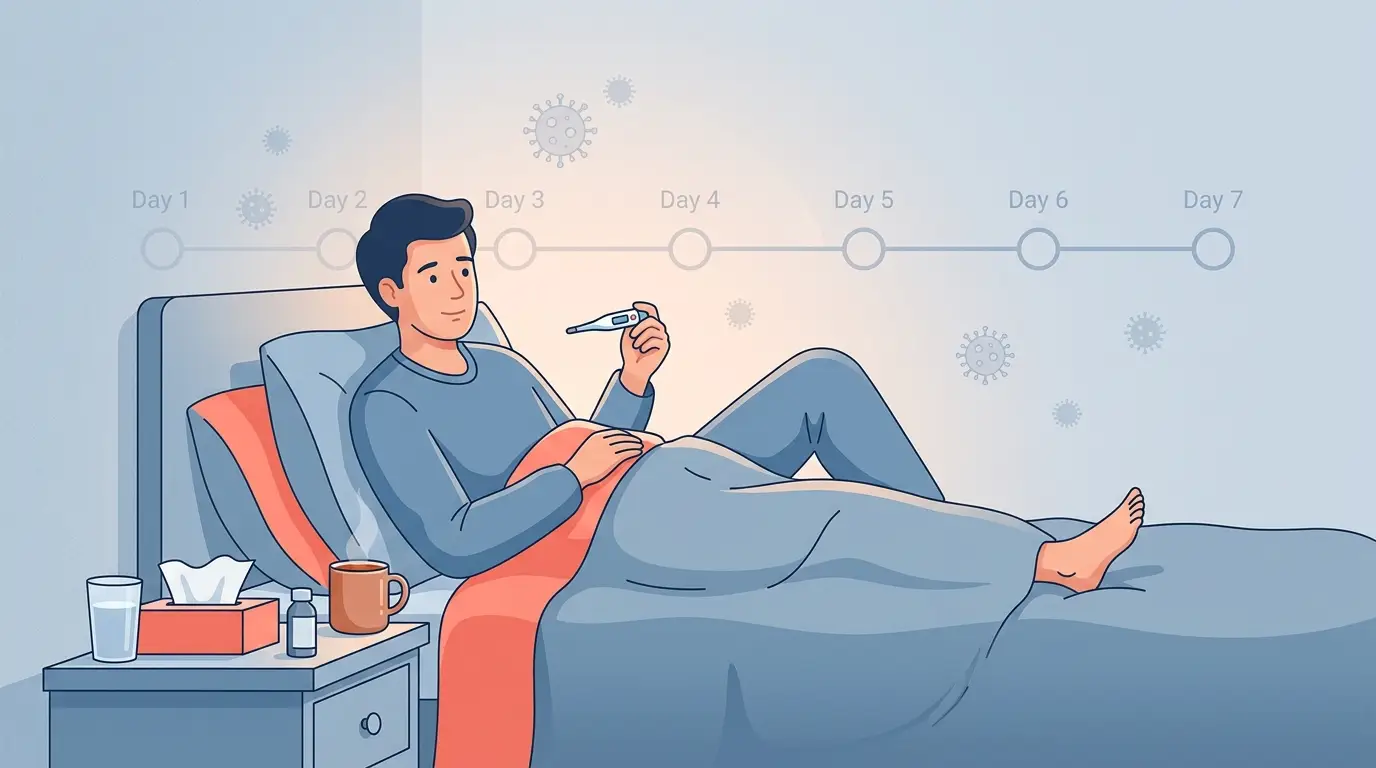
Day 0 (exposure): You’ve encountered the virus. No symptoms yet. Not yet contagious.
Day 1 (late incubation): Viral shedding may begin. You feel fine or nearly fine. You are already contagious. This is where the danger lies for people around you.
Days 2 through 4 (symptom onset, peak illness): Symptoms appear — fever, body aches, fatigue, respiratory symptoms. Viral shedding is at its highest. This is your most contagious period. Stay home.
Days 5 through 7 (declining illness): Symptoms begin improving. Fever typically resolves. Viral shedding is decreasing but not gone. Still contagious, especially around vulnerable people.
Day 7 and beyond (recovery): Most healthy adults are no longer meaningfully contagious. Lingering cough and fatigue are common but don’t indicate ongoing contagiousness.
Children: Extend all of the above by two to three days, with peak shedding potentially lasting through day five or six.
Frequently Asked Questions About Flu Contagiousness
How long is someone contagious with the flu if they have no fever?
Fever is not required for contagiousness. You can shed the influenza virus with no fever at all, especially early in the illness or late in recovery. Relying solely on fever as your indicator for when you’re contagious is not reliable. The five-to-seven-day window from symptom onset is a more accurate guide.
Can I spread the flu after I start taking Tamiflu?
Yes, though the duration of contagiousness may be shortened. Tamiflu reduces viral shedding but doesn’t eliminate it immediately. You should still follow standard isolation guidance (at minimum 24 hours fever-free, ideally five days from symptom onset) even while on antivirals.
Is the flu contagious through food or shared dishes?
Influenza is not a foodborne illness. It doesn’t spread through food. Sharing dishes is a low-risk activity compared to sharing the same air or touching shared surfaces like doorknobs and then touching your face.
How long is the flu contagious on surfaces?
Influenza virus can survive on hard, non-porous surfaces (metal, plastic) for up to 24 hours. On porous surfaces (fabric, tissues), it degrades much more quickly, often within minutes to a few hours. Regular handwashing and disinfecting high-touch surfaces during flu season is genuinely protective.
If I had the flu last month, can I catch it again this season?
Yes. Influenza mutates rapidly, and there are multiple strains circulating each season. Having had influenza A/H3N2 in November doesn’t protect you from influenza B in February. Annual vaccination is the most effective strategy for broad seasonal protection.
My symptoms are mostly gone but I still have a bad cough. Am I still contagious?
For most healthy adults, a persistent cough two weeks after flu onset is not a sign of ongoing contagiousness. Post-infectious cough (sometimes called post-flu cough) is caused by airway inflammation during recovery, not active viral shedding. You’re almost certainly past your contagious window by this point. That said, if you’re around immunocompromised individuals, err on the side of caution and consult your doctor.
Can I spread the flu to my pet?
Cats and dogs are not known to contract human influenza strains under normal circumstances. Ferrets, however, are susceptible to human flu strains and can both catch the flu from humans and potentially spread it back. If you have a ferret and you have the flu, limit contact.
The Bottom Line
The flu is contagious for longer than most people assume — starting a full day before symptoms appear, peaking in the first four days of illness, and persisting at lower levels through day seven. Children shed virus for up to ten days. Immunocompromised individuals can remain contagious for weeks.
The most protective thing you can do is simple: test early, stay home through at least day five of symptoms (not just until your fever breaks), and don’t underestimate the pre-symptomatic window. The flu spreads most aggressively precisely when people feel well enough to carry on normally.
Antivirals work best when started within 48 hours of symptom onset. Vaccination reduces both your own risk and the community burden of transmission. And handwashing remains one of the genuinely underrated tools in the toolkit.